May 2026 Market Update: China–UK / Europe Shipping Disruptions
As we move through May, global supply chains continue to face significant disruption, particularly across China-to-UK and European trade lanes. Ongoing conflict in the Middle East, combined with operational challenges across ocean freight networks, is creating a complex and volatile shipping environment.
We wanted to share a clear update on what’s happening, and more importantly, what it means for your business.
What’s Driving the Disruption?
Multiple external pressures are currently impacting global shipping:
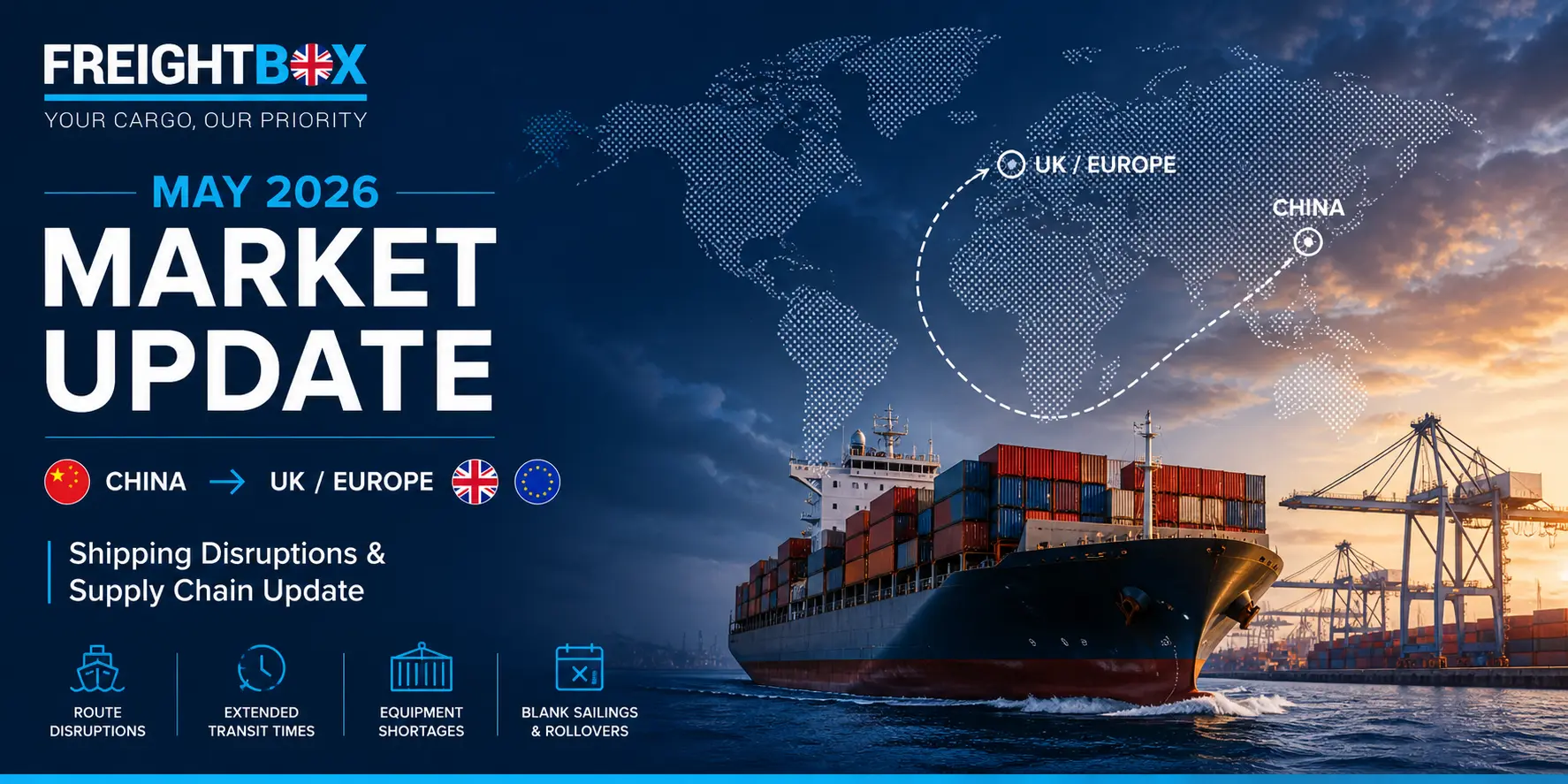
- Middle East Conflict: Continued instability in the region is affecting key maritime routes. Most carriers are still avoiding the Red Sea and Suez Canal, rerouting vessels via the Cape of Good Hope.
- Extended Transit Times: These diversions are adding 7 to 10 days to standard China-to-Europe transit times.
- Equipment Shortages at Origin: Due to continued vessel rerouting and disruption across key trade lanes, containers are not returning to Asia in a balanced flow. This is leading to shortages of empty containers at major Chinese export hubs, making it more difficult to secure equipment for planned shipments.
- Blank Sailings Increasing: Carriers continue to cancel scheduled departures to manage capacity and network disruption.
- Cargo Rollovers: As a result, we are seeing a significant rise in rolled cargo, where shipments are not loaded as planned and are pushed to the next available vessel.
- Constant Schedule Changes: Sailing schedules are being frequently revised, often at short notice, making forward planning increasingly difficult.
- Reduced Vessel Reliability: Even confirmed bookings are not immune to delays due to ongoing network adjustments.
Impact on UK & European Imports
These disruptions are having a direct effect on supply chains:
- Unpredictable Schedules: Vessel delays, port omissions, and last-minute changes are now common.
- Port Congestion: European ports are experiencing vessel bunching, causing delays in unloading and inland distribution.
- Delayed Departures: Cargo may miss its intended vessel and be rebooked automatically to a later sailing.
- Extended Lead Times: Rollovers and schedule changes are adding further delays on top of already longer transit times.
- Uncertain ETAs: Estimated arrival dates are becoming less reliable and may change multiple times during transit.
- Space Constraints: High demand combined with blank sailings is tightening available capacity.
What This Means for You
To maintain supply chain stability, we strongly recommend:
- Book earlier than usual to improve chances of securing space on planned sailings
- Build flexibility into your supply chain to account for possible rollovers
- Allow additional buffer time in your planning and stock management
- Stay in close communication with our team for the latest updates on your shipments
Are You Experiencing These Challenges In Your Supply Chain?
Our team is here to help you move smarter, faster, and with complete confidence; contact us today on 0121 516 1903 or via our contact form.